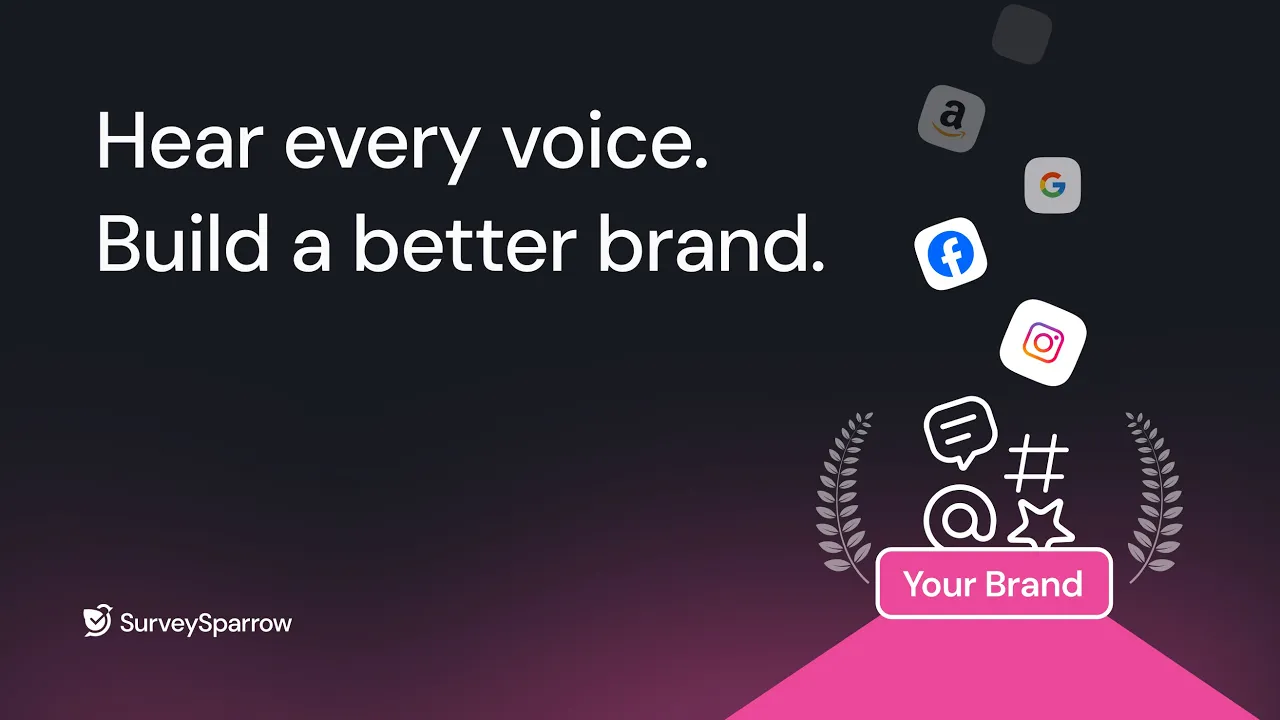
SurveySparrow: Brand CX
Transforming brand protection with AI-powered social listening and review management
The Challenge
Enterprise brands were drowning in fragmented reputation data across review sites, social platforms, and customer feedback channels. Teams struggled with:
Data Chaos: Reviews and mentions scattered across 100+ platforms with no central view
Slow Crisis Response: Manual monitoring meant critical issues were discovered too late
Analysis Paralysis: Mountains of unstructured feedback with no actionable insights
Resource Drain: Teams spending 15+ hours weekly on manual reputation management
Business goal:
Create an enterprise-grade reputation command center that turns scattered brand signals into strategic intelligence.
My Role & Approach
As Senior Product Designer for the Reputation module within SurveySparrow's Voice of Customer platform, I led the end-to-end design of social listening and review management systems.
Discovery and research
Analyzed enterprise workflows managing 1000+ daily mentions
Identified critical pain point: time from mention → insight → action
Mapped competitive intelligence gaps in existing tools
Information Architecture
Designed dual-mode system: Review Management + Social Listening
Created unified data model handling structured (reviews) and unstructured (social) data
Built modular dashboard framework supporting both real-time and historical analysis
Enterprise Complexity → Clarity
Transformed 15+ data dimensions into scannable visual hierarchy
Designed progressive disclosure patterns for deep-dive analysis
Created alert systems balancing noise reduction with critical issue detection
Key Design Solutions

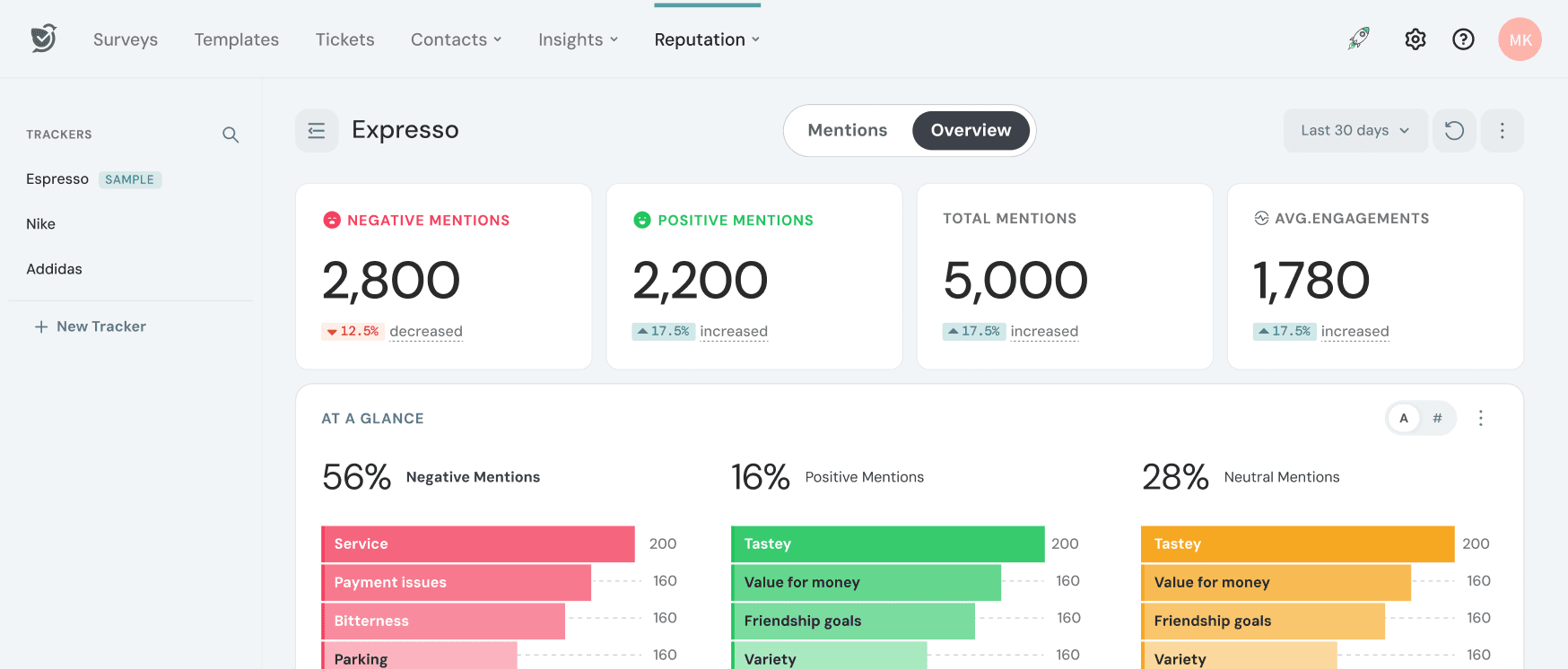
1. Unified Intelligence Dashboard
Problem: Users toggling between 5-8 different tools to monitor brand health
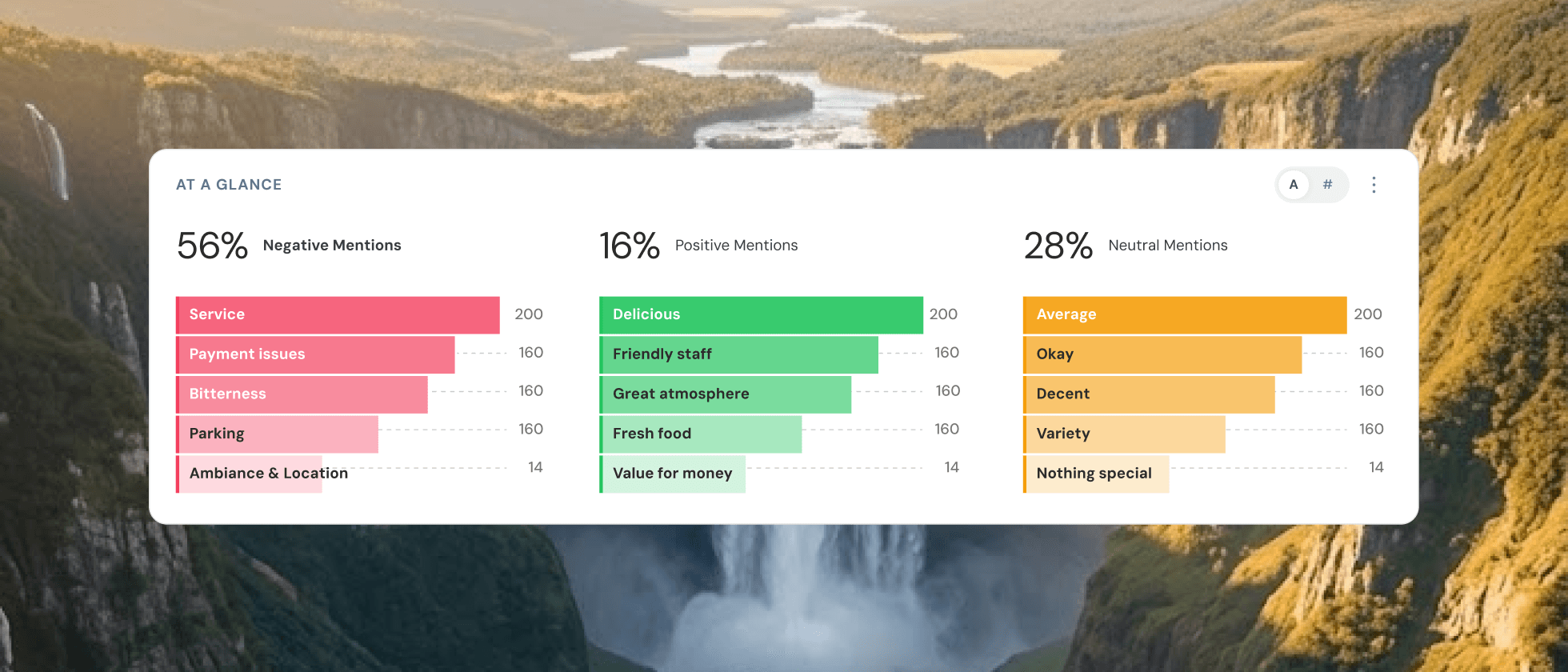
Solution: Single-pane overview showing:
Real-time mention metrics with trend indicators
Sentiment distribution (positive/negative/neutral) at-a-glance
Engagement analytics with historical comparison
Crisis detection through sentiment spike visualization
Impact: Reduced monitoring time from 2 hours to 15 minutes daily
2. AI-Powered Sentiment Analysis
Problem: Manual sentiment tagging couldn't scale to 5000+ monthly mentions
Solution: Designed AI sentiment engine interface that:
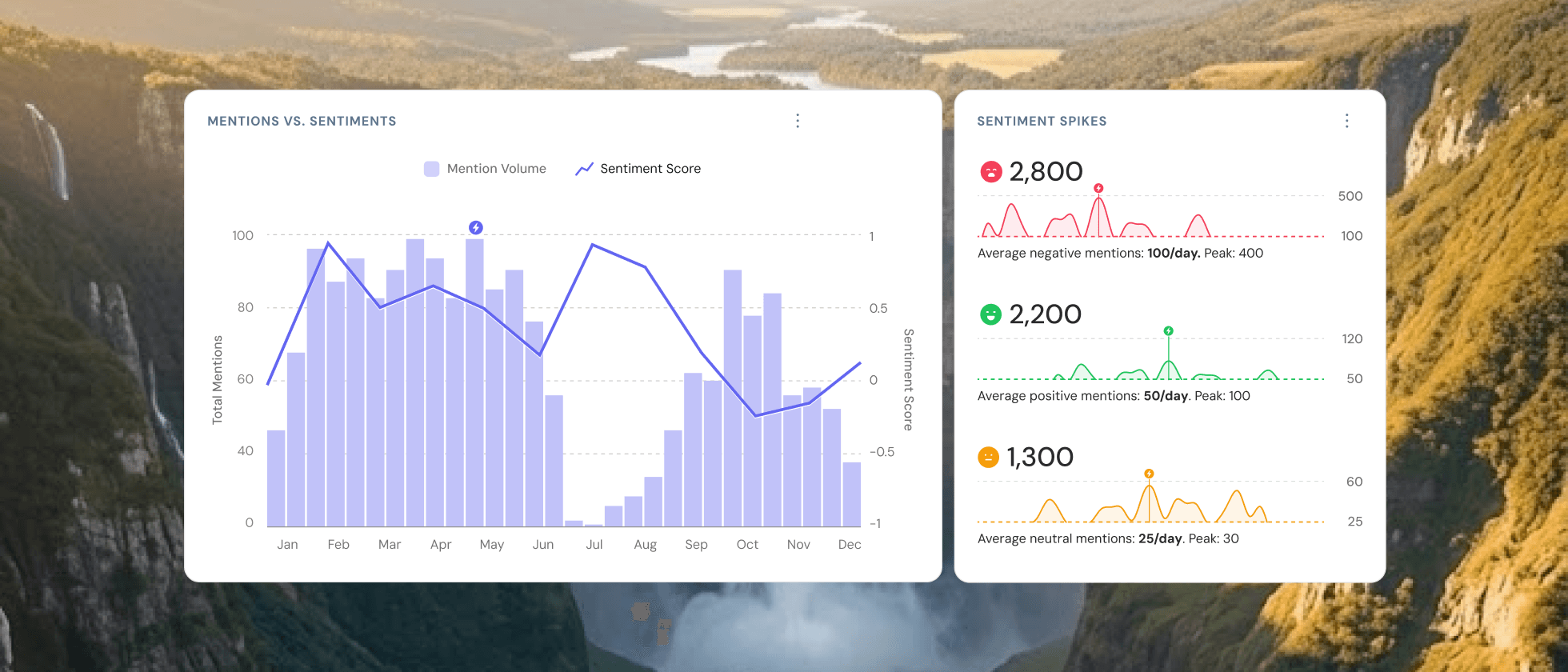
Auto-categorizes mentions into topics (Service, Product Quality, Staff Behavior)
Visualizes sentiment trends over time with volume correlation
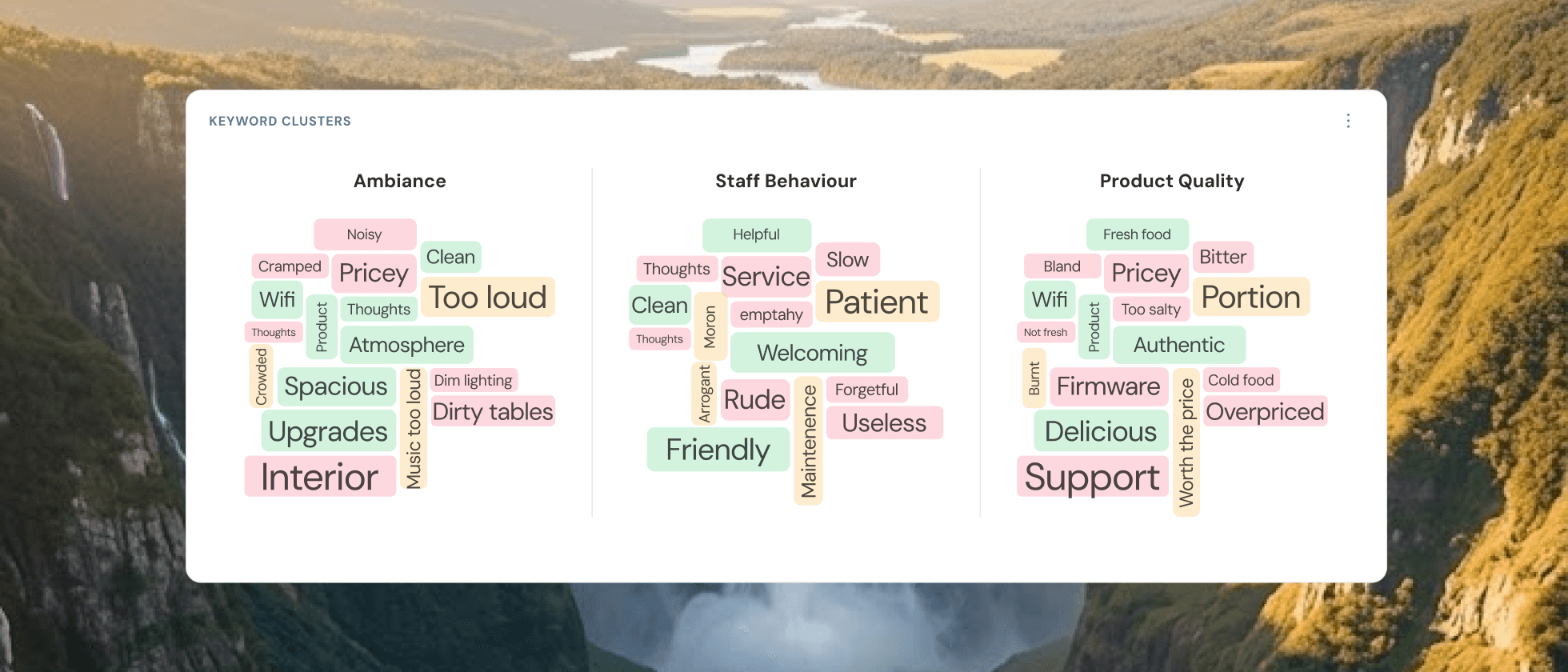
Surfaces emerging themes through keyword clustering word clouds
Shows competitive sentiment benchmarking
Design decision : Split view (Mentions vs. Sentiments) allowing users to see both volume and emotional context simultaneously
Impact: 85% reduction in manual categorization effort
3.Intelligent Alert & Crisis Management
Problem: Alert fatigue from generic notifications, critical issues buried in noise
Solution: Designed multi-tier alert system:
Sentiment Spike Detection: Visual graphs showing unusual negative/positive patterns
Peak Analysis: "Average mentions: 100/day, Peak: 400" with contextual thresholds
Daily Trends Heatmap: Time-of-day and day-of-week pattern recognition
Smart Filtering: AI-driven sensitivity controls to surface only actionable alerts
Design Innovation: Heatmap visualization , for e.g. showing Fridays (afternoons/evenings) and Saturdays (early mornings) drive peak mentions — enabling proactive resource planning
Impact: Crisis response time reduced from hours to minutes
4. Keyword Intelligence System
Problem: Finding actionable themes in thousands of unstructured mentions
Solution: Designed keyword cluster visualization:
Word cloud categorization by topic (Ambiance, Staff Behaviour, Product Quality)
Size-weighted importance (larger = higher frequency)
Color-coded sentiment (red = negative themes, green = positive)
Drill-down to source mentions from cluster view
Impact: Product teams identify improvement areas 3x faster
Results & Impact
Business Impact
Reputation Module: Drove revenue from $0 → ~$100K in first year post-launch
Social Listening Module: Increased average deal size by 1.5x through enhanced social chatter insights and competitive intelligence
Key differentiator in enterprise sales conversations
Positioned SurveySparrow as complete Voice of Customer platform (not just surveys)
Enabled expansion into reputation management market ($50.9B → $122.8B by 2033)
User Impact:
90% reduction in time spent monitoring reputation across platforms
60% faster crisis detection and response time
5000+ mentions/month processed automatically vs. manual review
100+ platforms unified into single dashboard
"This dashboard transformed how we protect our brand. We went from reactive firefighting to proactive strategy. The sentiment spike detection alone has saved us from three potential PR crises."
Enterprise Customer, Managing 50+ Location
Product Impact:
Transformed reactive reputation management into proactive strategy
Enabled data-driven decisions through sentiment trend analysis
Reduced cognitive load for enterprise teams managing multiple brands
Created competitive advantage through AI-powered insights
Design Principles Applied
Progressive Disclosure Summary metrics → Category breakdown → Individual mention details
Density Without Clutter Packed enterprise-grade data into scannable cards using visual hierarchy
Context Over Raw Data "2,800 negative mentions" + "↑12.5% decreased" + "Average: 100/day, Peak: 400" = actionable insight
AI as Intelligence Amplifier AI handles volume and pattern detection, humans handle strategy and response
Speed to Action Every visualization designed with "what should I do next?" in mind
Key Learnings
Enterprise ≠ Complex UI - Initial wireframes tried to show everything at once. Learned that enterprise users value clarity over comprehensiveness. Final design uses progressive disclosure and smart defaults.
Sentiment Requires Context - Raw sentiment scores mean nothing without volume correlation. "90% positive" with 10 mentions vs. 10,000 mentions tells different stories. Designed dual-axis charts solving this.
Alerts Need Thresholds - Early versions flooded users with notifications. Designed AI-powered sensitivity controls and "only show spikes beyond normal patterns" logic, reducing noise by 75%.
Word Clouds Need Structure Random word clouds are pretty but useless. Designed clustered, categorized, sentiment-coded word clouds that actually drive product decisions.
Next Evolution
Predictive Intelligence Forecast sentiment trends based on historical patterns
Automated Response Workflows AI-suggested responses for common mention types
Competitive Deep-Dive Expanded benchmarking showing "why" competitors outperform, not just "that" they do
Multi-brand Management Designed for enterprises managing 10+ brands simultaneously